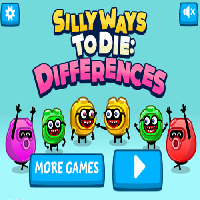
SILLY WAYS TO DIE DIFFERENCES




SIMILAR GAMES





















Description


Silly Ways to Die Differences - Unblocked Games For School - UGFS
About Silly Ways to Die Differences - Unblocked Games For School - UGFS
We explore the unique charm of Silly Ways to Die as it appears on the Unblocked Games For School platform, highlighting the subtle yet significant differences that set this version apart from its original releases. Our analysis delves into gameplay variations, visual design choices, and interactive elements that make the UGFS edition a compelling option for students seeking both entertainment and cognitive stimulation during classroom breaks.
Game Overview and Core Differences
In this section we examine the fundamental differences between the classic Silly Ways to Die experience and the version hosted on unblocked-games-for-school.gitlab.io. The UGFS adaptation maintains the whimsical premise of guiding quirky characters through hazardous obstacle courses, but introduces enhanced physics simulations and refined collision detection. These technical upgrades result in smoother animations and more predictable outcomes, allowing players to develop strategic approaches without the frustration of random glitches.
Visual and Audio Enhancements
We note that the UGFS rendition incorporates higher‑resolution sprites and richer color palettes, which improve visual clarity on school‑networked devices. Background music has been remastered to include subtle melodic cues that reinforce level progression, while sound effects now feature layered feedback tones that signal impending danger. These auditory refinements contribute to an immersive atmosphere that encourages sustained engagement.
Level Design and Difficulty Progression
The level architecture on the UGFS site presents a broader spectrum of challenges, ranging from introductory tutorials to complex multi‑stage puzzles. Each stage introduces new hazard types, such as moving platforms, rotating blades, and timed barriers, which require precise timing and reflexive decision‑making. Difficulty curves are calibrated to increase incrementally, ensuring that players are constantly presented with fresh obstacles that test both reaction speed and problem‑solving acumen.
Interaction Mechanics and Player Controls
Controls have been optimized for keyboard and touch inputs, providing responsive command sequences that translate directly into on‑screen actions. The inclusion of a pause menu with adjustable speed settings enables customizable pacing, allowing learners to focus on strategic planning rather than frantic button mashing. Additionally, the game now supports simple mouse drag gestures for certain interactive elements, expanding the repertoire of player agency.
Educational Value and Classroom Integration
We believe that Silly Ways to Die offers more than mere amusement; it serves as a valuable tool for developing critical cognitive skills within an educational context. By engaging with the game’s intricate design, students can enhance spatial awareness, improve hand‑eye coordination, and practice logical reasoning. Teachers can leverage these mechanics to facilitate discussions on cause‑and‑effect relationships, risk assessment, and iterative learning cycles.
- Spatial Reasoning: Navigating complex obstacle layouts promotes mental mapping and visualization abilities.
- Strategic Planning: Players must anticipate hazards and devise optimal routes, fostering forward‑thinking.
- Iterative Problem Solving: Repeated attempts encourage experimentation and reflection on failure modes.
- Collaborative Play: Multiplayer modes enable peer‑to‑peer feedback, supporting communication skills.
Implementation Guide for Educators
Integrating the UGFS version into a classroom environment is straightforward, requiring only a compatible browser and internet access. Educators can assign specific levels as part of a larger lesson plan focused on critical thinking or STEM concepts. The following steps outline a practical implementation strategy:
- Assess Technical Requirements: Verify that school computers meet minimum hardware specifications and have the necessary browser updates installed.
- Select Target Levels: Choose stages that align with curriculum objectives, such as those emphasizing physics principles or logical sequencing.
- Introduce Game Mechanics: Begin with a brief tutorial that explains controls, objectives, and scoring criteria.
- Facilitate Reflection: After gameplay, guide students in discussing strategies, identifying mistakes, and proposing alternative approaches.
- Assess Learning Outcomes: Use in‑game performance metrics to evaluate improvements in problem‑solving speed and accuracy.
Assessment and Feedback Mechanisms
To maximize educational impact, teachers can employ built‑in scoring systems to track progression and provide targeted feedback. Customizable leaderboards allow for healthy competition while maintaining a focus on personal growth rather than mere rankings. Additionally, integrating screenshots of completed levels into digital portfolios can serve as tangible evidence of skill development over time.
Community and Support Resources
The UGFS platform fosters an active community of players who share tips, strategies, and user‑generated content through built‑in forums and discussion boards. Educators can tap into these resources to discover innovative classroom applications and stay updated on forthcoming updates or educational extensions. Engaging with the community also encourages students to develop digital citizenship skills through respectful online interaction.
Future Developments and Expansion Plans
Looking ahead, the developers of Unblocked Games For School have announced plans to enrich the Silly Ways to Die experience with new thematic packs, additional character customization options, and enhanced analytics tools. These forthcoming features aim to deepen engagement by introducing collaborative missions that require joint problem‑solving among classmates. Anticipated updates will also incorporate adaptive difficulty algorithms that tailor challenge levels to individual skill proficiencies, ensuring that each learner remains appropriately challenged.
By continuously refining gameplay mechanics and expanding educational integrations, the UGFS version of Silly Ways to Die is poised to remain a staple of productive leisure within school settings, delivering both entertainment value and meaningful learning outcomes.
Play Silly Ways to Die Differences for free on Unblocked Games For School - UGFS, the platform with thousands of the best games. No Ads and easy to play from anywhere. Have fun with our unblocked games! Play with your keyboard or Click.